
the eu pay transparency directive
preparing for pay transparency
The EU Pay Transparency Directive requires organisations to demonstrate fairness, transparency and consistency in how they reward employees, while also preparing for expanded gender pay gap reporting obligations, employee requests for pay information and greater scrutiny around gender pay discrimination and pay disparity by gender. We help organisations prepare for these changes through practical HR support, internal pay equity analysis, robust job grading frameworks and strategic guidance tailored to your business.

Pay Transparency Compliance
The Directive introduces new responsibilities for employers relating to recruitment practices, employee rights, gender pay reporting, salary transparency obligations and equal pay transparency. We can help your organisation prepare proactively and confidently for these changes while ensuring compliance with evolving wage transparency laws and EU employment law requirements.

Job Evaluation Frameworks & Pay Structures
A robust job evaluation framework is at the core of pay transparency compliance. We support organisations in designing and implementing fair, objective and transparent job grading and pay evaluation systems that stand up to internal and external scrutiny while supporting pay equity, reducing gender salary gap risks and strengthening consistency across pay structures.

Training & Leadership Support
Preparing for pay transparency is not just a compliance exercise – it also requires leadership alignment, manager capability and clear communication. We provide practical training and advisory support to ensure your leadership team and managers are equipped to deal with employee queries, salary transparency discussions and conversations around gender pay and pay discrimination.
Looking for expert support as you prepare for The EU Pay Transparency Directive?
Contact us today for a confidential discussion on how we can help your organisation prepare for the Equal Pay Directive, strengthen pay equity and manage future gender pay gap reporting requirements.
FREQUENTLY ASKED QUESTIONS
The EU Pay Transparency Directive represents one of the most significant changes to EU employment law, employment and reward practices in recent years. Organisations that prepare early will be in a far stronger position to reduce legal risk, strengthen employee trust and build fairer, more transparent workplaces through improved pay transparency and stronger pay equity practices. Here are some of the questions we most frequently get asked.
What is the Pay Transparency Directive in Ireland and what does it mean for employers?
The Directive strengthens the principle of equal pay for equal work (or work of equal value).
For Irish employers, it introduces:
- Pay transparency in recruitment
- Employee rights to request pay information
- Expanded gender pay gap reporting
- Greater accountability for pay decisions
In practice, organisations must ensure pay is structured, consistent, and defensible.
Has the Pay Transparency Directive been delayed or “kicked out” in Ireland?
No – the Directive has not been delayed, cancelled, or “kicked out.”
The legal requirement still applies from June 2026.
The Irish Government has indicated that enforcement will be pragmatic in the early stages, meaning employers are unlikely to face immediate penalties if they are not fully compliant from day one.
However, this is not a deferral. Employers are still expected to:
- Take meaningful steps toward compliance
- Demonstrate progress and intent
- Put appropriate structures in place
This is a grace period on enforcement – not on obligation.
What do employers in Ireland need to comply with by June 2026?
By June 2026, employers should be ready to:
- Provide pay information early in recruitment
- Ensure employees can discuss pay without restriction
- Respond to employee pay information requests
- Clearly explain how pay is determined
Even with pragmatic enforcement, these requirements are expected to be in place or underway.
Do I have to publish salary ranges on job advertisements in Ireland?
Not in every job ad.
However, employers must provide salary or pay information early in the hiring process (for example, in the advertisement, before interview, or at another early stage).
Withholding salary information entirely will not be compliant.
Can employers in Ireland ask candidates about their current salary?
No.
Employers will be prohibited from asking about pay history.
Pay decisions must be based on:
- The role, and
- The organisation’s pay structure
- not previous earnings.
What is “work of equal value”?
Roles are of equal value when they require comparable:
- Skills
- Effort
- Responsibility
- Working conditions
MASTERCLASS

Masterclass: Building the Foundations for Pay Transparency
This practical 2-hour masterclass focuses on the area that will require the greatest effort from most organisations: job evaluation. Participants will learn how to assess roles systematically, identify potential pay equity risks, establish transparent grading structures and create the foundations for long-term compliance with the Directive.
Podcast episodes
WEBINAR
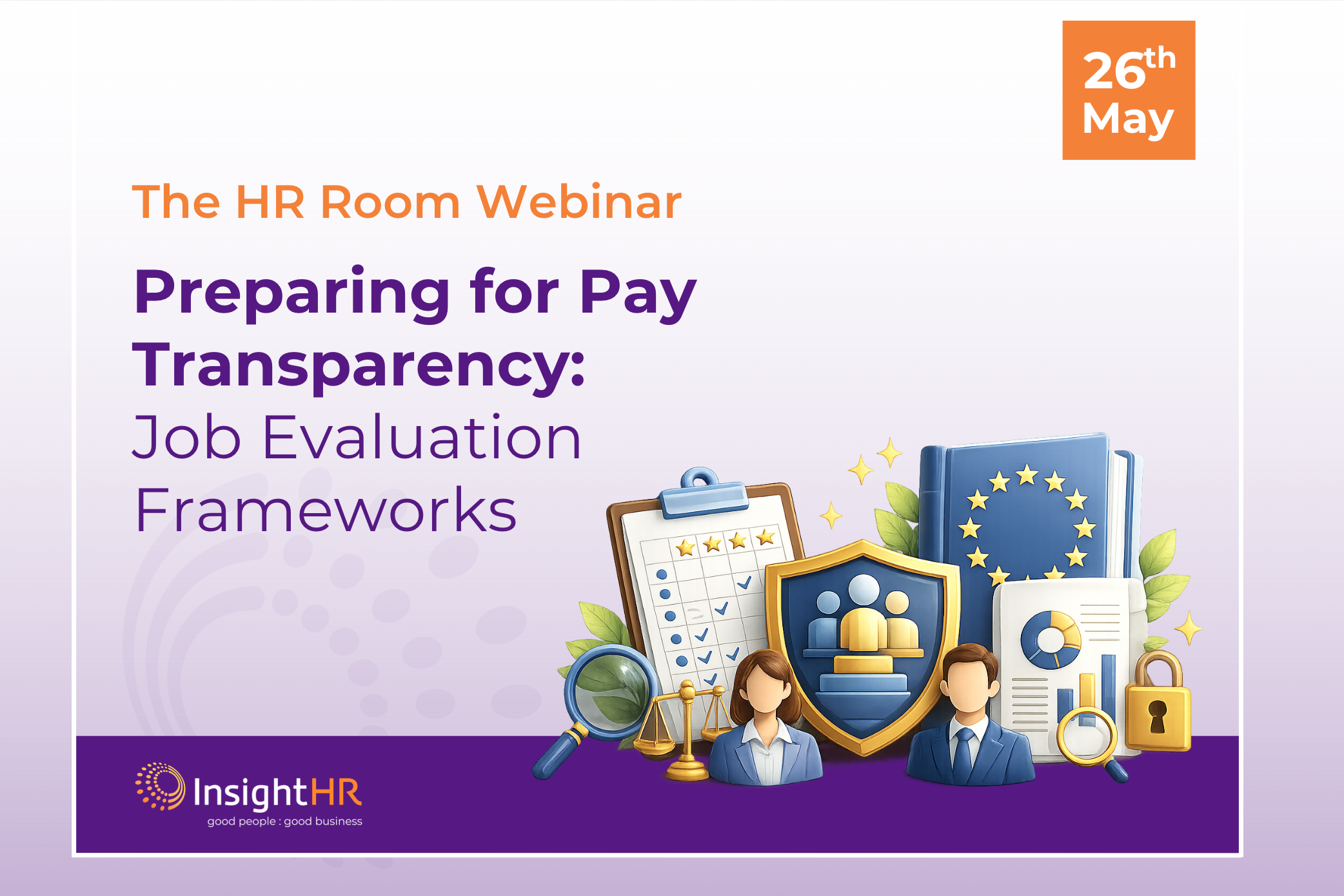
Live Webinar: Preparing for Pay Transparency – Job Evaluation Frameworks
Whether you are just beginning to consider your organisation’s approach or already reviewing your pay structures, this webinar will provide valuable guidance on the practical steps employers should be taking now to support fairness, compliance, and long-term organisational trust.
Featuring Joe Thompson, Head of HR Services at Insight HR, and Síobhra Rush, Partner at Lewis Silkin Ireland and leading employment law expert, this webinar will combine practical HR guidance with expert legal insight to help organisations understand their obligations, avoid common pitfalls, and prepare for the cultural shift that greater pay transparency will bring.
ARTICLES
Pay Transparency Legislation in Ireland: Why Employers Need to Start Job Evaluation Now
The reality is that all organisations will need to adapt in meaningful ways, and those that have already begun preparing or who start now will be far better positioned than those waiting for Irish legislation to materialise.
Our Head of Change & Transformation Megan Power outlines specifically what employers need to prepare for, including obligations relating to gender pay reporting, pay transparency, salary transparency and the Equal Pay Directive after June 7th 2026.
The EU Pay Transparency Directive: Implications for Irish Businesses
Many Irish organisations still have not started preparing for upcoming pay equity and pay transparency legislation. That is a serious mistake.
As employers prepare for the EU Pay Transparency Directive and increasing equal pay obligations, many are underestimating the scale of organisational change that may be required to achieve compliance.